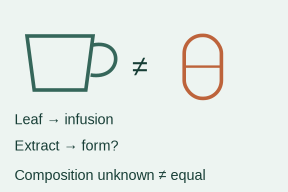
A cup can be part of usual drinking habits. Its caffeine content varies. Supplement mixtures can combine several stimulant sources. Before considering an extract, record quantities and other products consumed. Anses has published guidance on sports supplements; a familiar drink does not validate a concentrate.
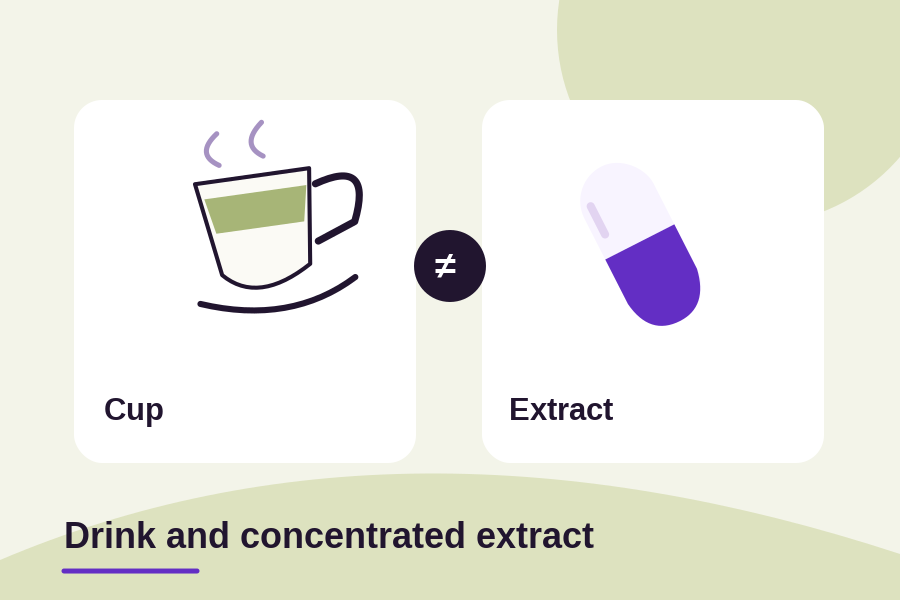
A cup and an extract are not equivalent
A cup made for taste and concentrated green-tea extract should not be judged as one product. For an extract, ask about quantity, formulation and precautions. Mention other drinks and supplements used. A cup’s taste is not evidence that a capsule works.
EXAMPLE / HOW TO USE IT
An example to adapt
List caffeine sources over a day, including drinks and supplements. Write “quantity unknown” where the label does not identify it. Discuss the list with a pharmacist before adding a product.
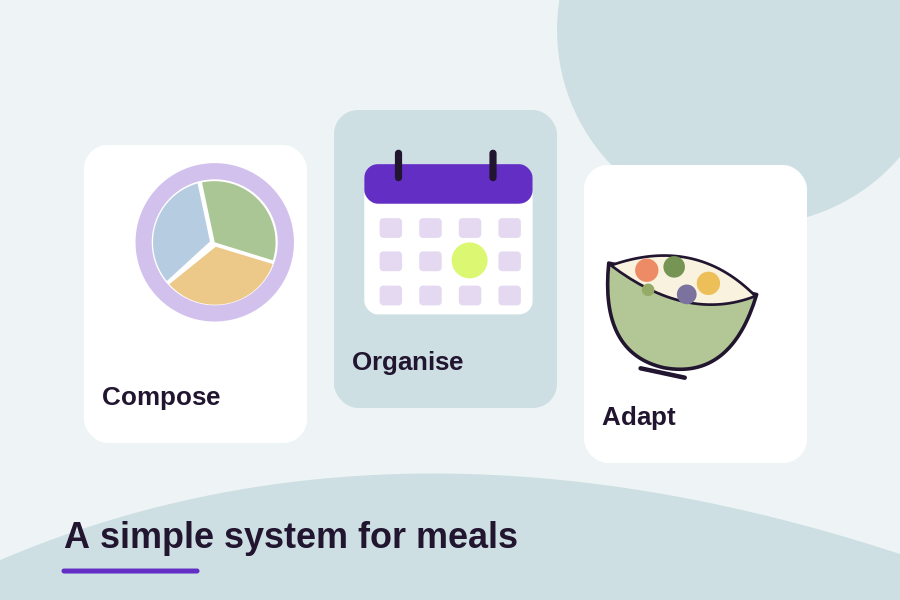
Original guide-specific checklist diagram. Steps are reproduced in the text below.Read the figure text
What to expect: A cup can be part of usual drinking habits. · A cup and an extract are not equivalent: A cup made for taste and concentrated green-tea extract should not be judged as one product.
Keep this checklist
Identify the form.
Identify combined stimulant sources.
Place this choice within your overall meals.
Reassess according to your circumstances and preferences.
References consulted for this edition. Studies and documents retain their actual years. Educational examples and documentary procedures, not personal product trials.
Compare the preparation on the label before comparing claims
“Green tea” on the front of two packs does not make them equivalent preparations. EFSA’s European assessment communication of 18 April 2018 distinguishes infusions from extracts in food supplements: concentration, composition and patterns of consumption can differ. This is a reading exercise, not a recommendation to choose a product, a safe intake calculation or evidence that either product causes weight loss.
Read three invented labels
The following labels are deliberately incomplete teaching examples. They describe no real brand or patient. Keep the missing information visible rather than filling it from a search result for another preparation.
Label A: “Camellia sinensis leaf, for infusion.” Record plant = Camellia sinensis; part = leaf; preparation = infusion; caffeine and catechin information = not provided in this example. The word “leaf” does not supply an analysed composition for the prepared drink.
Label B: “Green tea extract, capsules.” Record preparation = extract; presentation = capsule; extraction description, catechins and EGCG = not stated. Capsule and extract identify different fields. A capsule count cannot replace the missing composition.
Label C: “Green tea extract with other ingredients.” Copy the complete ingredient list from an actual label when using this worksheet. Here it is absent. Record mixture = yes; other constituents and caffeine sources = unknown. Do not treat the mixture as the single-ingredient preparation in a paper.
Follow the preparation back to the source
The EMA assessment report dated 12 November 2013, EMA/HMPC/283629/2012, explicitly separates herbal substance, preparation and pharmaceutical form. Its scope is particular green-tea leaf preparations in the EU herbal-medicine framework. That dated report is not a current authorisation for every supplement bearing a similar name. Read the exact preparation and jurisdiction before carrying a statement from a document to a packet.
Photograph or transcribe the complete label for your own reference, including the preparation and warning text. No personal health information is needed.
Record which information is per unit, per serving or another stated basis. Preserve the original basis; do not convert unlike products into an invented equivalent.
Mark every missing component as unknown. A reassuring product name is not a substitute for it.
Take the record to a pharmacist or doctor with a specific question: “Does this evidence concern this preparation, and what information is still missing?” Do not change prescribed treatment on the basis of this comparison.
Copyable record: exact product wording ___; plant/part ___; preparation ___; form ___; complete ingredients ___; stated composition and basis ___; warnings ___; document/date/jurisdiction ___; matching fields ___; missing fields ___; question for a professional ___. A completed reading record can end with “not comparable from the information available”.