
Everyday habits
Habits that fit real life
Plan meals, clarify objectives and examine constraints without extreme challenges.

A 1,000-calorie diet: why a sample menu is not enough
A fixed calorie limit does not describe your needs or a care pathway. This page replaces old restrictive meal plans with a way to discuss an appropriate objective.
Read the guide ↗
Blood glucose and weight: understand without self-treating
Blood glucose is a medical measurement. General food advice cannot replace assessing an abnormal result or adjusting treatment.
Read the guide ↗
Food and satiety: observe what suits you
Searching for a food that removes all hunger can obscure meal organisation. A descriptive journal identifies situations to discuss without counting or judging each bite.
Read the guide ↗
“Forbidden” foods: replace a blacklist with guidance
A universal forbidden-food list does not describe one person’s needs. Separate medical restrictions from arbitrary slimming rules.
Read the guide ↗
Cheat meals: enjoyment without compensation
The language of “cheating” can make an ordinary meal guilt-inducing. Plan an enjoyable meal without promising to restart metabolism.
Read the guide ↗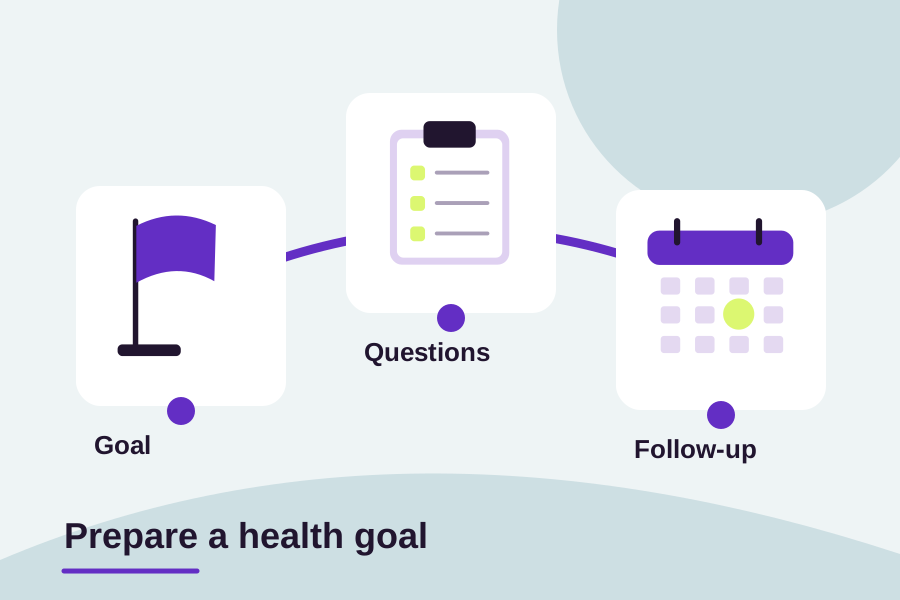
Losing five kilos quickly: prepare a health objective
A kilogram target and short deadline do not define an appropriate strategy. First examine the reason and what can change without an extreme programme.
Read the guide ↗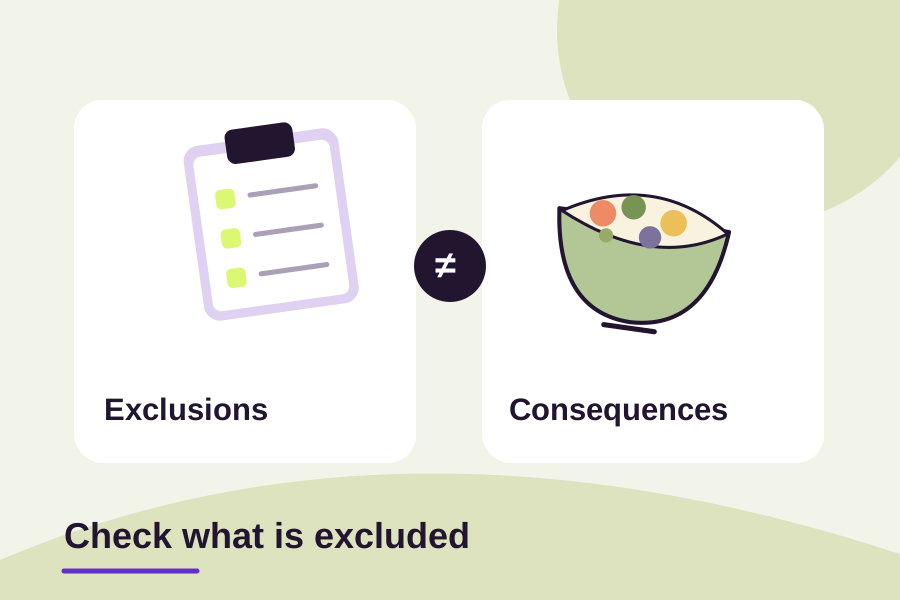
Drastic diets: check exclusions before starting
Restriction can be presented as proof of commitment. Examining what a programme removes is often more useful than its before-and-after image.
Read the guide ↗