Define the claim
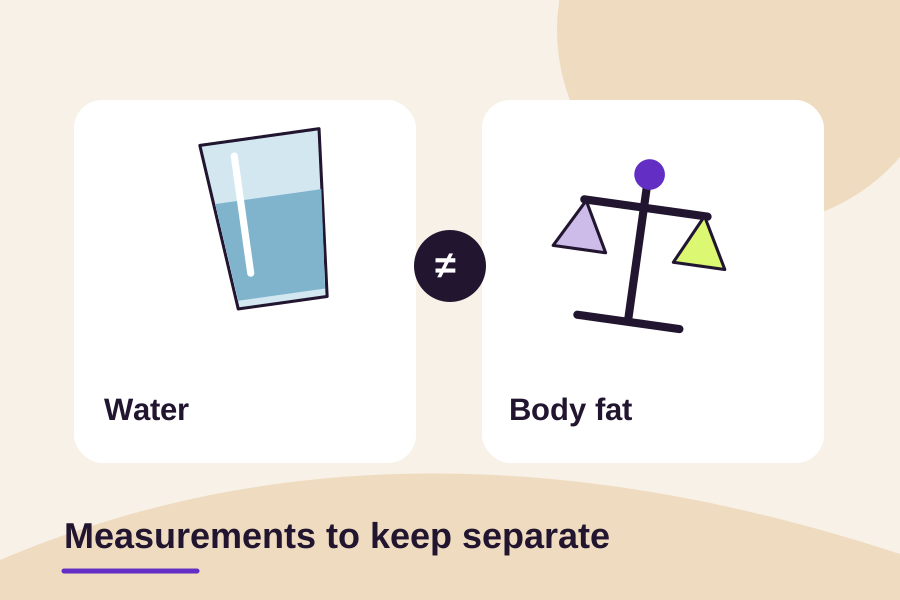
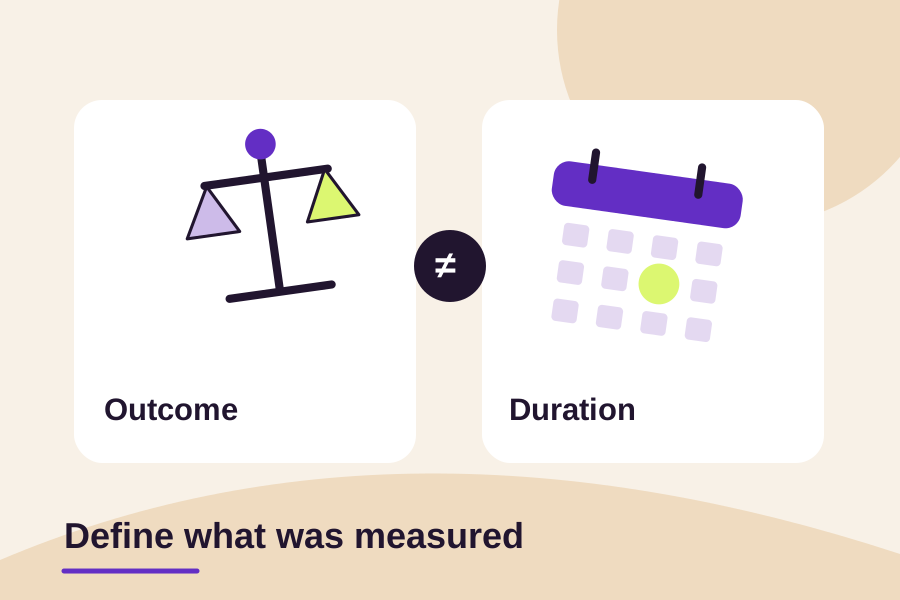
Write exactly what is promised: lower weight, waist measurement, fat mass or hunger, or higher energy expenditure. These outcomes are not interchangeable. A demonstration in a cell, animal or mechanism is not a human clinical trial. A change observed on one day says little about what happens months later.
Find the comparison group
A before-and-after study without a control cannot separate a product’s effects from other changes. Check how participants were allocated and whether groups received comparable support. Note those who left the trial. Results reported only for finishers may create a different impression from results for everyone initially assigned.
Keep the unknowns visible
The NIH review highlights varied and limited evidence for weight-loss supplements. Keep a “what is missing” column: current formula, quantity, a study of the mixture or long-term data. A claim absent from the publication must not be added by inference. Safety is a second question to examine even if an effect is established.
EXAMPLE / HOW TO USE IT
Turn a promise into a question
“Activates metabolism” becomes: which measurement, in how many people, against which comparator and for how long? If the seller supplies only a mechanism diagram, the promised weight outcome remains unproven.

Read the figure text
Define the claim: Write exactly what is promised: lower weight, waist measurement, fat mass or hunger, or higher energy expenditure. · Find the comparison group: A before-and-after study without a control cannot separate a product’s effects from other changes. · Keep the unknowns visible: The NIH review highlights varied and limited evidence for weight-loss supplements.
Keep this checklist
- Name the outcome.
- Look for a human trial.
- Identify control and duration.
- Separate efficacy, uncertainty and risks.
Sources and limitations
References consulted for this edition. Studies and documents retain their actual years. Educational examples and documentary procedures, not personal product trials.