
Read the label before the ranking
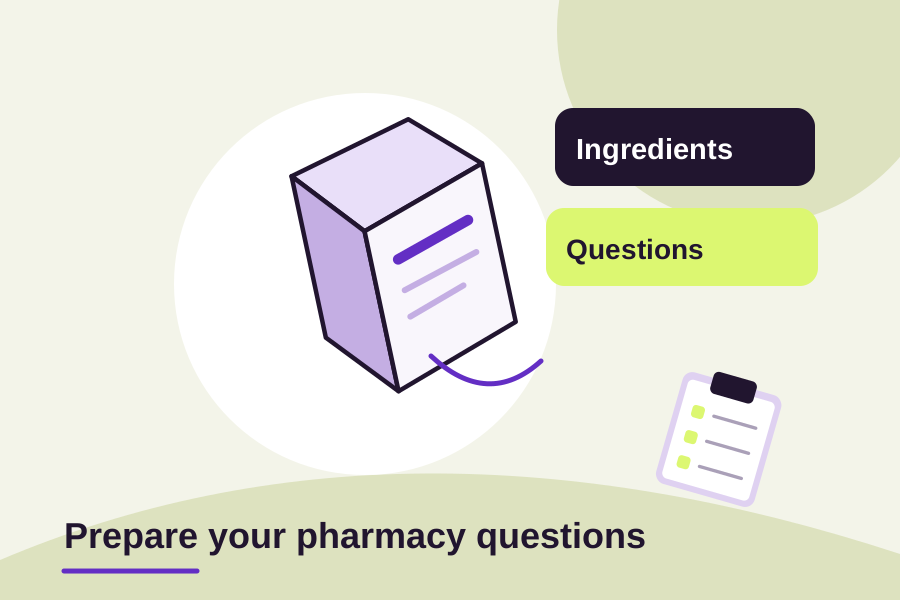
Record the exact name, formulation, ingredients, quantities per serving and manufacturer’s instructions. A study of one substance does not necessarily test the marketed mixture. An advertisement claiming a “clinical formula” should identify a publication on that formula. If quantities are hidden in a proprietary blend, write “not verifiable” instead of giving a flattering score.
The outcome that matters
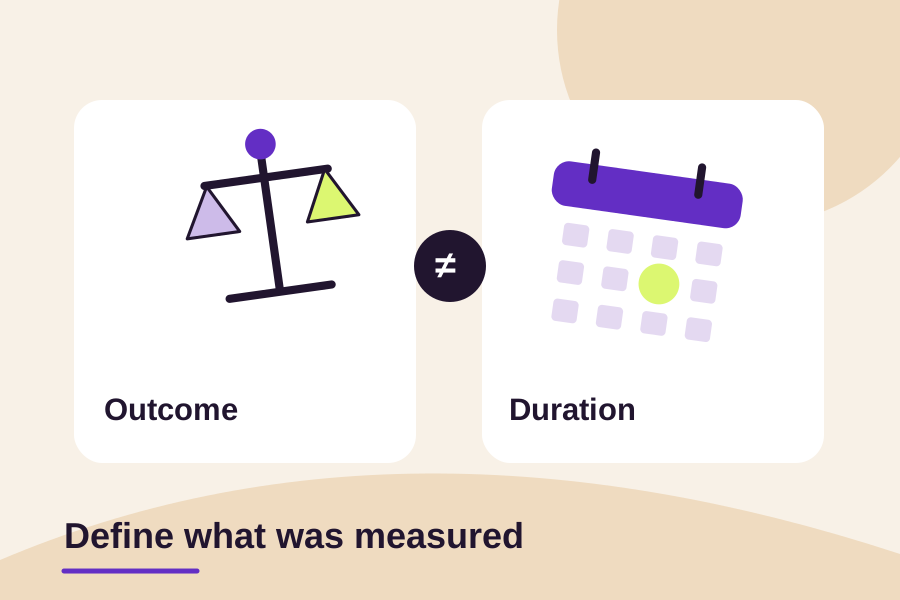
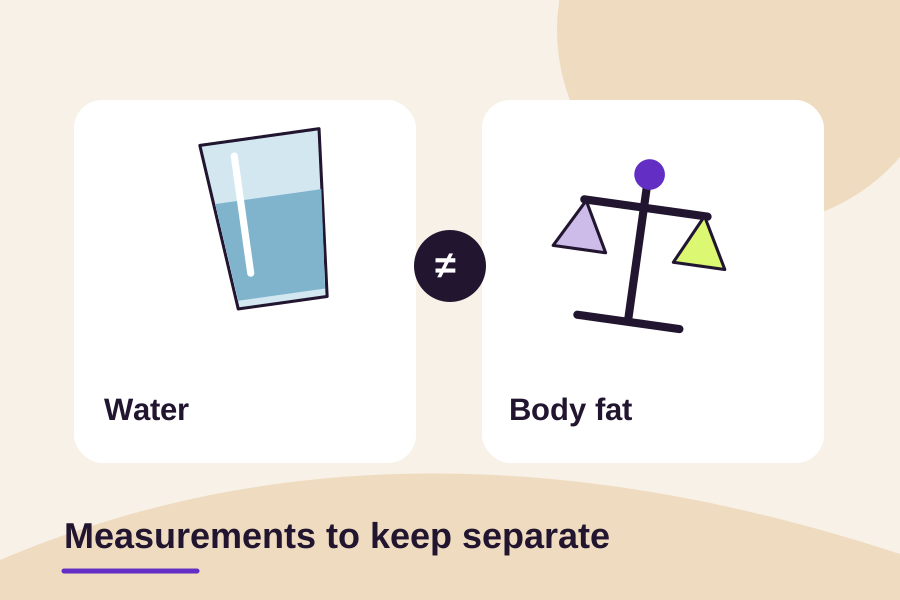
Ask whether the study measured weight, fat mass, hunger or only a laboratory response. Find the comparison group and duration. A change in sensation or a biological mechanism is not automatically a lasting benefit. Customer reviews lack a control group and often mix changes in eating, activity and product use. They can identify a question, but cannot establish causation.
Deciding with incomplete information
Our method does not name a “number one”. It separates information into three categories: documented for the formula, extrapolated from an ingredient, and undocumented. Risks need a separate check with a pharmacist or doctor, particularly if you take medication. The absence of adverse effects in a few reviews does not establish safety. A supplement is not a medicine indicated to treat obesity.
EXAMPLE / HOW TO USE IT
A fictional product file
An advertisement for “Product A” cites a study on ingredient X. Its label gives no quantity and the formula contains four other substances. File conclusion: publication on X identified; dose match unknown; formula A not studied in the supplied reference. This does not justify “effective” or converting uncertainty into a score.

Read the figure text
Read the label before the ranking: Record the exact name, formulation, ingredients, quantities per serving and manufacturer’s instructions. · The outcome that matters: Ask whether the study measured weight, fat mass, hunger or only a laboratory response. · Deciding with incomplete information: Our method does not name a “number one”.
Keep this checklist
- Photograph the formula and serving information.
- Find the cited study.
- Compare formula, population and outcome.
- Have risks and interactions checked.
What “best” should mean
Before reading a commercial selection, write down the outcome you want to understand. Weight change, body-fat change, an energetic feeling, waist circumference and reported satisfaction are different outcomes. A seller may highlight a real result that still does not answer your question. The word fat burner is not a clinical definition or evidence that the advertised outcome occurs.
We do not choose a winner from packaging photographs, customer reviews or ingredient counts. This guide examines a specific claim, its reference and the match with the presentation being sold. If the formula or reference cannot be obtained, the conclusion is “information missing”, rather than an invented positive or negative rating.
The NIH Office of Dietary Supplements fact sheet is a starting point for ingredients sold in weight-loss supplements. It explains available research and safety questions. It does not replace the exact composition of a mixture or advice from the professional who knows your medicines. An ingredient studied in one context does not validate every combination bearing its name.
Build the record before comparing
Choose an actual presentation and record its full name, manufacturer, composition, label serving information and the date you consulted it. Keep photographs of relevant packaging in your own records. Day, night, liquid and capsule variants need separate records when their composition differs. Do not merge products merely because they share a brand.
For each claim, ask for an identifiable reference: authors, title, year and publication link or identifier. “Scientifically proven” without a reference does not reveal what was done. Start with the objective, participants, comparator, duration and measured outcome. An abstract can help locate the protocol but may not contain all its limitations.
Keep unknowns in a separate column. An absent quantity, different formulation or study involving another population matters. Do not fill a gap with another seller’s description. An incomplete record can be an honest result: it identifies exactly what remains to be requested.
| Field | Record | What a mismatch means |
|---|---|---|
| Claim | Exact promised outcome | Another measured outcome does not establish the promise |
| Formula | Ingredients and quantities | Ingredient research is not automatically research on the mixture |
| Population | Study participants | Another population limits direct applicability |
| Comparator | Placebo, another preparation or none | A within-group change does not isolate an added effect |
| Duration | Follow-up and measurement dates | A short trial does not establish a persistent result |
| Safety | Reported adverse effects and precautions | An effect estimate does not replace a safety assessment |
Worked example: a claim that does not match its reference
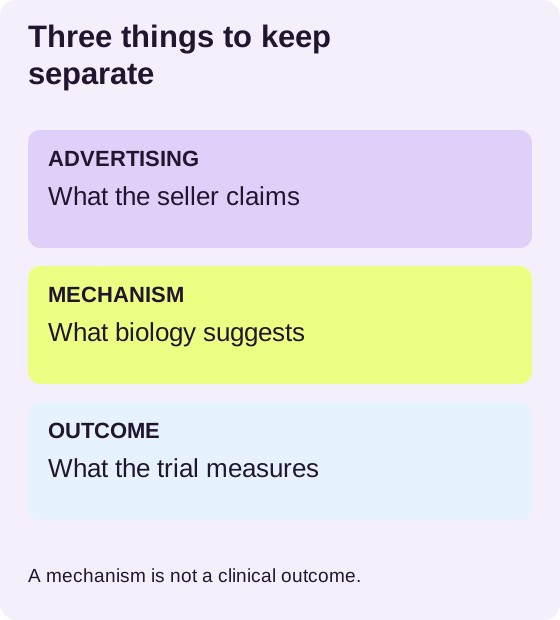
Educational example, with no actual product trial: an advertisement says “targets belly fat” and cites research on an ingredient. The reference describes a laboratory reaction, not a human trial of this preparation. The advertisement promises a localised outcome; the research documents a mechanism. The marketed mixture does not appear in the protocol.
Record three observations: the advertised outcome differs from the measured outcome; the marketed product differs from the object studied; a human match cannot be established from this reference alone. This does not automatically prove that every possible effect is absent. It shows that this particular evidence does not support this particular claim. The distinction avoids both an unjustified recommendation and an absolute verdict.
The useful request is now precise: “Which publication measures the advertised outcome using this formulation in the intended population?” If another study is supplied, add a second reference row. Keep the first so that you can trace why it was classified as a mismatch.
Read a result without enlarging its meaning
A change within one group does not necessarily show what the product adds. If a comparator is present, examine both groups and how results were analysed. Record other interventions such as food changes, activity or support. Do not subtract outcomes from separate studies as though they formed a direct comparison.
An average describes the studied group. It does not predict every individual’s outcome or prove persistence after the trial. Percentages, kilograms and percentage points must retain their units. A difference without duration or population loses essential meaning. Dropouts, sample size and adverse effects also deserve examination.
A purchase recommendation requires more than a plausible mechanism or isolated finding. This guide supplies no dose, stimulant-stacking plan or rapid weight-loss protocol. Safety and interaction questions concern the exact preparation and individual circumstances and belong with a health professional.
Label, formula and safety: separate checks
The label describes what is offered; it does not by itself establish clinical effectiveness. Composition helps search for a research match; it does not remove risk. Regulatory information or a warning explains precautions; it does not make every product in a category identical.
Prepare a list of medicines and supplements being used, together with drinks or products whose ingredients may overlap. Bring compositions rather than brand names alone. Do not resolve uncertainty by increasing portions, combining fat burners or buying a supposedly stronger variant. The site does not calculate an assumed safe combination.
For Garcinia cambogia, consult the Anses assessment and alerts linked in the ingredient guide. Medicines and hormones belong outside a supplement shopping comparison: authorisation, prescribing and clinical follow-up form a separate process. A sales page cannot replace that assessment.
Price does not fill an evidence gap
Compare commercial terms only after identifying the presentation: package quantity, stated servings, price, delivery, possible renewal and refund conditions. Cost per serving describes a budget, not clinical effectiveness. A discount or testimonial cannot complete a missing formula.
Arithmetic example: fictitious packages cost €24 for 30 servings and €36 for 60 servings. Their displayed costs per serving are €0.80 and €0.60. This proves neither greater clinical value nor equivalent composition. Add applicable fees and check each label’s definition of a serving before comparison.
A reasonable next step may be requesting information, discussing the preparation with a professional or deciding not to buy. This is not a failed comparison. The useful result is a documented question and a clearer uncertainty, rather than necessarily a completed purchase.
Does a reference support the claim?
Common questions
Does a longer ingredient list mean a better product?
No. It makes the preparation more complex to identify. Each quantity, formulation match and safety question still needs checking.
Can a customer testimonial replace a study?
No. It describes a report, without establishing what caused a result or what the exact preparation adds.
Is a missing reference proof of no effect?
No. It is a missing piece of evidence. Do not turn uncertainty into either a recommendation or an absolute verdict.
Sources and limitations
References consulted for this edition. Studies and documents retain their actual years. Educational examples and documentary procedures, not personal product trials.